
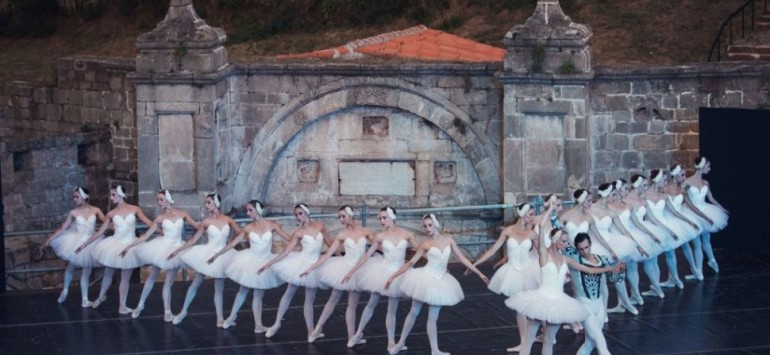
The cultural wealth of Bulgaria is suggested by the number and quality of singers who have achieved international stature. We are pleased to present some of them here.
- Raina Kabaivanska, soprano is a Bulgarian opera singer, one of the leading lirico of her generation, particularly associated with Verdi and Puccini, although she sang a wide range of roles. In 1962, she made her debuts at both the Royal Opera House in London, as Desdemona in Verdi's Otello, and the Metropolitan Opera in New York, as Nedda. She went on performing at the Bolshoi Theatre in Moscow, the Teatro Colon in Buenos Aires, the Paris Opéra, the Vienna State Opera, the Budapest Opera, the Lyric Opera of Chicago, the San Francisco Opera, the Dallas Opera, the Teatro dell'Opera di Roma, etc. She also appeared in a few opera films, notably Pagliacci, opposite Jon Vickers in 1968, Il trovatore, opposite Franco Bonisolli, in 1975, and Tosca, opposite Plácido Domingo, in 1976. Kabaivanska has received the following international opera awards: Bellini (1965), Viotti d'Oro (1970), Puccini (1978), Illica (1979), Monteverdi (1980), the Award of Accademia 'Medici' - Lorenzo il Magnifico, Florence (1990), the Grand Prix 'A Life, Dedicated to the Music', Venice (2000).
If you want to buy vouchers for performances of Sofia Opera and Ballet click here.
Raina Kabaivanska - Tosca's Aria from Act Two of Toska
If you want to buy CD disk "Raina Kabaivanska - In Concert" click here.
- Ghena Dimitrova, soprano. Her voice was known for its power and extension used in operatic roles such as Turandot in a career spanning four decades. Dimitrova won the Sofia International Singing Competition in 1970, the prize including a course of study at La Scala's Scuola di Perfezionamento. She made her Italian debut as Turandot in Treviso in 1975, and essayed the same role for her 1983 La Scala debut opposite tenor Placido Domingo in Franco Zeffirelli's lavish production. Her Turandot is also preserved in a video of the Arena di Verona production from 1983, with Nicola Martinucci and Cecilia Gasdia. In 1988, she made her debut at the Metropolitan Opera in New York performing the same role. Dimitrova once said of the role: "Turandot may not be my favorite part, but it shows off the voice to great advantage. The way the music is written, you need a voice like a trumpet to do it justice."Her debut in the United States was in 1981 performing the role of Elvira in Ernani. She sang at the Barbican Arts Centre in Ponchielli's La Gioconda in 1983 before making her Covent Garden debut in the same year. Her late debut she later attributed simply to "politics".After retiring from the stage in 2001, Dimitrova remained active working with young singers. One of her best students is the soprano Elena Baramova.
- Hristina Angelakova, soprano. Specialized in Rome and Milan. Soloist at the Milan's La Scala, performed with Luciano Pavarotti. Starred on the stages of almost all European opera theatres. Winner of many prestigious opera awards and competitions in Bulgaria and abroad. Her long career with the Sofia National Opera began in 1967 with her stage debut in Xerxes by Handel. During 1973 she was a prizewinner in the International Competition for Young Opera Singers in Sofia. Soon an international career developed at La Scala in Milan, the Deutscher Oper Berlin, the Hamburg State Opera and in Brussels, Mexico and Venice. In 1987 she sang Amneris in a production of Aida at the Temple of Luxor. This role was repeated with the Deutscher Oper Berlin in 1988. Major roles in her career included: Amneris, Azucena, Ulrica, Eboli, Laura in Gioconda and in the Russian operas of Tchaikovsky and Glinka. Her repertoire extended from Gluck to Stravinsky.
- Alexandrina Pendatchanska, soprano. Making her stage debut at age 17 in the role of Violetta in La traviata, she soon won the Antonin Dvorak Competition in Karlovy Vary, was placed second in the International Vocal Competition in Bilbao in 1988, and won UNISA singing competition in Pretoria in 1989. The soprano's debut outside Bulgaria took place in Bilbao, where she sang the title role in Lucia di Lammermoor. Since 1989 she has sung in many of the most prestigious opera houses around the world, including those in Vienna, Paris, Berlin, New York (at the New York City Opera), Rome, Brussels, Washington, Hamburg, Moscow, Turin, Naples, Santa Fe, Bregenz, Monte Carlo, and Tel Aviv. Pendatchanska performed the title role of Esclarmonde at Teatro Regio in Turin in November 1992 at the age of 22, at which time she was even younger than that of Sybil Sanderson, who created the infamously difficult role at age 24.During the 1997–2001 operatic seasons Pendatchanska sang the role of Elisabetta in Roberto Devereux (Turin and Naples), Adina in Adina (Pesaro), Suor Angelica in Suor Angelica (Lucca), Luisa in Luisa Miller (Naples and Berlin), and in Ermione (Santa Fe and New York).
- Ina Kancheva, soprano. At the time when the great opera singer Montserrat Caballe had a concert-recital in Sofia, she chose to present to the audience one of her students - the young singer Ina Kancheva. This was not only an indication of politeness to the host country. Ina Kancheva's performance was brilliant and she proved to be a worthy partner to her world-famous teacher. Ina Kancheva was born in Sofia and while still a child, she showed a talent for singing (between 1986 and 1994 she was member and soloist of the Bulgarian National Radio Children's Choir). In 1996-2000 she was a student at the Pancho Vladigerov State Academy of Music in Sofia, in Associate Professor Jasmina Kostova's class. In the 1997-1998 period she specialized at the European Opera Centre in Manchester. Since the year 2000 she has been a regular participant in Montserrat Caballe's master classes in Andorra, and since 2001 she has been working with Raina Kabaivanska. Ina Kancheva has taken part in a number of prestigious international festivals, in numerous gala concerts and opera performances in Bulgaria and throughout the world. She has performed on the opera stages of Stara Zagora, Varna, Plovdiv, Andorra, Sarajevo, Skopje, Madrid, etc. She has been constantly enriching her repertoire and currently it includes many of the major soprano parts along with some rarely performed parts in works like Carl Orff's Carmina Burana and Sergei Rachmaninoff's The Bells.
Ina Kancheva - Romeo Et Juliette. Act 1.
If you want to buy CD disk "Ina Kancheva, Soprano" click here.
- Katya Popova, soprano. After studies at the Conservatory of Sofia with Mara Marinova-Cibulka, Katja Spiridonova and Asen Dimitrov, she graduated with highest honors. Immediately employed by the Sofia National Opera, she debuted in 1947 as Esmeralda in The Bartered Bride. In 1964, after winning first prize at the Youth Festival in Budapest, Katja Popova went on to win the first prize in the Singing Competition in Prague. International appearances took the soprano to Germany and France. In 1959 she sang the role of Marguerite in Faust at both the Paris Grand Opéra and at the Vienna State Opera. In 1962 after repeating the same role in Brussels, she appeared in Russia and Czechoslovakia. Also known as an important concert singer, she was awarded the Dimitrov Prize, the highest of the Bulgarian awards.
- Hristina Morfova, soprano. Her debut was at the Czech Theater in Brno singing Marie in The Bartered Bride in 1910. She traveled to Paris in 1911 to study with Jaques Isnardon. Returning to Sofia in 1912, the soprano sang the role of Marie in the Bulgarian premier of The Bartered Bride. She continued working as a voice teacher in Sofia and at the same time touring other Balkan countries. After performing in Russia in 1913 she returned to Prague working as a teacher and concert singer. Her debut with the Prague National Theater in 1916 was singing the Queen of the Night in The Magic Flute. Between 1920 and 1924, in addition to being a regular member of the company, she appeared as a guest in Germany, Italy, Paris and London. Towards the end of the 1920s, Christina returned to Sofia and became a member of the Sofia National opera from 1931 to 1935, in addition to teaching at the State Academy of Music. She was the first woman to produce an opera in Bulgaria with a production of the Bartered Bride. She was called the Bulgarian Nightingale. Her repertoire included Aida, Lakme, Queen of the Night, Mignon, Butterfly, Violetta, Donna Anna and roles in the operas of Dvorak and Smetana.
- Boris Christoff, bass. Probably the best known of all Bulgarian opera singers is the bass, Boris Christoff. He began a career in law but after being heard in the famous Gusla Choir by King Boris he was sent to Rome to study with Riccardo Stracciari in 1942. Vocal studies continued in 1943 with Muratti in Salzburg. After being released from a refugee camp following World War Two he began his career as a concert singer in Italy. His debut was at the Teatro Adriano in Rome singing Colline in 1946. In 1947 he sang the two bass roles of Pimen and Boris Godunov with the La Scala in Milan. In 1950 he began a glorious ten-year career with the La Scala where he sang most of the major bass characters in the Italian, French and Russian repertoire. Additional international appearances included Milan in 1947 where he sang Pimen, Covent Garden in 1949, Paris in 1953 and Salzburg in 1960. Singing in Florence in 1961 he was a partner of Maria Callas in a production of I Vespri Siciliani. In 1950 Boris Christoff was engaged to sing Philip in a new production of Don Carlo by the Metropolitan Opera in the United States. Unfortunately, he was unable to obtain an entry visa because he was a citizen of Communist Bulgaria. His debut in the U.S. was singing Boris with the San Francisco Opera in 1956. Regular appearances followed with the Chicago Lyric Opera between 1958 and 1963.
The major roles of his vast career included most of the bass characters of Verdi including Phillip, Fiesco, the Padre in Forza del Destino; the Mefistofeles of Gounod and Boito; Konchak, Boris, Dosifey in the Russian repertoire and King Marke and Gurnemanz in the operas of Richard Wagner. He sang Boris in over 400 performances. Boris Christoff never sang an opera in his native Bulgaria because of political reasons.He was able through his personal magnetism and theatrical skills, to generate tension whenever he was on stage. His dramatic powers, and his ability to give words their fullest meaning, and expressive weight, placed him among the great singer actors of his day.
- Nicolai Ghiaurov, bass. As a child he sang in a church choir where he was discovered to have had an exceptional voice. After beginning his vocal studies in Sofia with Christo Brambarov he completed studies in Leningrad and Moscow. 1955 proved to be an important year in his career, first in winning First Prize in a vocal competition in Paris and then in his stage debut at the Sofia National Opera as Don Basilio in The Barber of Seville. In 1957, following a guest appearance as Ramfis at the Vienna State Opera additional engagements took him to the Bolshoi and to La Scala as Boris Godunov and Phillip in Don Carlo. A performance in Forza del Destino brought him to London and Covent Garden in 1962. Since 1962, he as been a regular soloist with the Vienna State Opera. At the Arena di Verona, engagements from 1961 to 1964 led to performances at the Salzburg Festivals of 1965-66 as Boris Godunov conducted by Herbert von Karajan. At the Paris Grand Opéra he sang the title role of Don Quichotte in 1974. His debut in the United States was at the Chicago Lyric Opera in 1964 followed by his debut at the Metropolitan Opera on 8 November 1965 as Mefistofele in Faust. At the Met additional roles included Philip in Don Carlo, Fiesco and Padre Guardiano in Forza del Destino. Additional appearances in the United States included Houston and San Francisco. In 1990-91 he returned to the Met as Boris Godunov.
- Nicola Ghiuselev, bass. Following six years of study at the Academy of Fine Arts in Sofia, the bass Nicola Ghiuselev began vocal studies with Christo Brambarov. While winning vocal competitions in Sofia in 1959, Prague in 1960 and Helsinki in 1962, he made his 1961 debut with the Sofia National Opera singing Timur in a production of Turandot. An international career developed with appearances at the Salzburg Festival in 1965, the Arena di Verona in 1976 through 1981, Paris, Moscow, Rome, London, Tokyo and at the Vienna State Opera were he sang the title role in Attila. After his debut at the Metropolitan Opera in 1965 as Ramfis in Aida, he continued singing there in La Boheme, Don Giovanni and Lucia di Lammermoor. Additional appearances in the United States included Chicago, San Francisco, Philadelphia and Houston. While his repertoire consisted of over seventy roles, his major roles included: Philip II, Boris Godounov, Don Giovanni, Attila and the Mefistofele roles of Gounod, Berlioz and Boito. His rich, dark toned voice is most effective in the bass roles of Verdi and also as Wotan in the Niebelungen Ring of Wagner. He recorded Wotan's farewell from Die Walküre but never performed the role on stage.
Nicola Ghiuselev - Don Carlos - Scena E Aria - Philippo - Ella giammai mamo.
If you want to buy CD disk "Nicola Ghiuselev" click here.
- Kaludi Kaloudov, tenor. He studied at the State Academy of Music as a student of Mdme. Jablenska. Kaludi won prizes in singing competitions in Sofia, Genoa, Athens and Moscow. Between 1978 and 1989, in addition to being first tenor with the Sofia National Opera, he appeared at many important European opera houses. He worked with the conductors Claudio Abbado, Fabio Luisi, Zuben Mehta and Riccardo Muti appearing in Attila in La Scala, Masked Ball in Genoa and Aida in Tel Aviv. His appearances in the United States as Dimitri in Boris Godunov took him to Chicago and Houston. Additional international appearances followed in Buenos Aires, Berlin, Dresden, Rome, Hamburg, Chile, France, Amsterdam, Philadelphia and Finland. In 1997-98 he toured Japan with the Slovak National Theater. Concert engagements took the singer to San Francisco, Trieste, Paris, Leipzig, Berlin and Geneva. Roles in his repertoire included Alfredo, Don Carlo, Radames, Manrico, Levski, Dimitri, Nemorino, Edgardo and the Duke in Rigoletto.
Kaludi Kaludov - Rigoletto - La donna
If you want to buy CD disk "Kaludi Kaludov - Verdi Recital" click here.


