The post Monasteries appeared first on Tour4Fun.
]]>At the turn of the 9th century there appeared another type of monasteries distinguished for their location rather than their internal organization. These were situated outside inhabited localities, sometimes at quite distant places, sometimes even in complete isolation.
Monasticism in Bulgaria was represented by the monk who was a man of letters. The monks were the ones who created the Bulgarian literature of the time, the ground-work of the all-Slavonic Orthodox literary writings. Their activities outlined the main function of the Bulgarian monasteries as the country’s major literary centers.

If you want to buy a voucher for concert performed by Orthodox Choir click here.
The rock monasteries should never be omitted when speaking of the monasteries in medieval Bulgaria. As the very name suggests, these sacred abodes – the monastic cells and the temple – were built or rather hewn out into the rocks. The cave or rock temples, although obeying different principles of construction, had inside decoration quite similar to the ornamentation, mostly pictorial, of the rest of the Christian cult buildings. The rock monasteries in Bulgaria appeared at places where nature allowed their construction: deep river valleys, plateaus, mountain slopes. No doubt, of greatest significance for the historical development of the Bulgarian monasteries were the complexes in Bassarabi in Northern Dobroudja (10th century), in Cherven and Ivanovo (12th – 14th centuries) and the Aladja Monastery in the vicinity of Varna (14th century).
If you want to hear Bulgarian Orthodox Chants, listen to the video.
If you want to buy CD disk with Bulgarian Orthodox Chants click here.
In 1396 the state Bulgaria was liquidated as an institution, by the Turks, which was followed by the withdrawal of the independence of the Church. The Turnovo Patriarchate was closed down, and the Bulgarian Church – put under the supremacy of Constantinople.
And then the monasteries came to the forefront. After the inevitable decline, abatement of their functions and even fading away of some of them, there began a process of visible rebirth for the majority of the monastic establishments. A great number of monasteries were strengthened, rebuilt or only decorated with paintings. The monasteries were thus destined to become the strongholds of the Bulgarian national spirit, centers of literary activities whose goal it was to gather and preserve the most outstanding works of Bulgaria’s medieval literature, architecture and art.
Bulgarian monasteries are the only national institution which has always shared in the destinies of the Bulgarian people, both at times of independence and magnificence, of foreign domination and despair. In the absence of a State and a Church the monasteries were the spiritual haven, the places where the nation was given shelter, a tower of strength for showing resistance, a point of departure along the road to the future. Being centers of Orthodox Christianity, guardians of the Bulgarian literary culture, treasure-troves of the religious art, the monasteries have remained even to this day those symbols of the Bulgarian spirit that are best identified with the nation.
Today our society keeps and values monasteries. Monastery complexes are declared monuments of culture, museums of Bulgarian cultural tradition.
If you want to buy a Bulgarian Orthodox icon with certificate click here.

The post Monasteries appeared first on Tour4Fun.
]]>The post Patriarchal Monastery of the Holy Trinity – Veliko Tarnovo appeared first on Tour4Fun.
]]>According to some sources, the Holy Trinity Monastery was founded in 1070. Other theories claim that the monastery was founded most likely by Patriarch Evtimiy (1325 – 1403) with the help of Tsar Ivan Shishman (who reigned in the period 1371 – 1395), and thus it got the names Patriarch’s Monastery and Shishman’s Monastery.
The monastery was the centre of Tarnovo Literary School when Evtimiy was hegumen there. The monastery continued to flourish even after 1375 when Evtimiy was elected Patriarch.
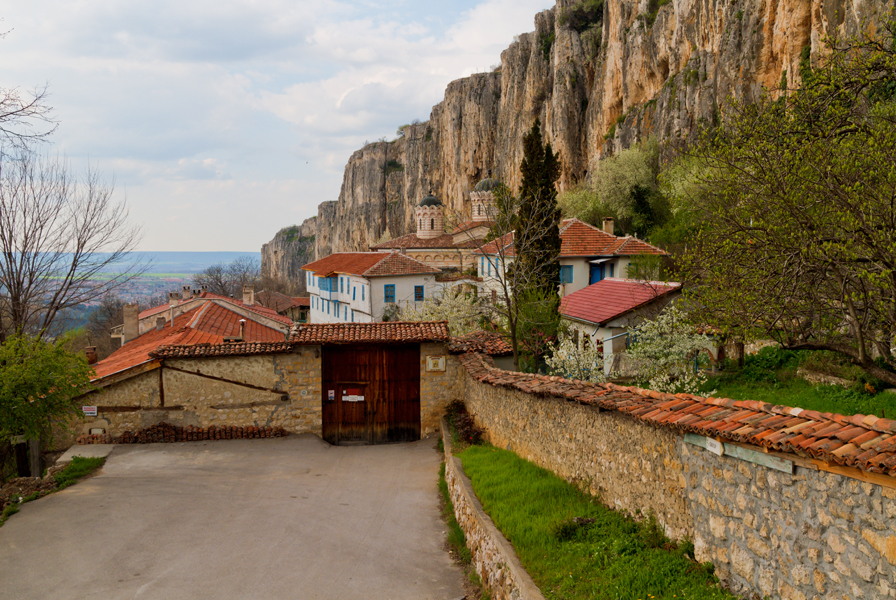
Patriarchal Monastery of the Holy Trinity, Veliko Tarnovo
The church of the monastery was built in 1847 by Kolyu Ficheto (one of the most renowned master builders of the Bulgarian Revival Period) and has beautiful wall-paintings. Zahari Zograf (the famous Bulgarian artist and iconographer, representative of Samokov Artistic School) painted the big icons of the Virgin Mary, John the Baptist, Christ Almighty, the Holy Trinity, etc.
In 1913 the church was destroyed by an earthquake. Some old icons were saved, and one of them was the Holy Trinity icon painted in 1708 which the temple was named after.
The church has an underground chapel and there are caves carved in the rocks that were used as cells and chapels during the Middle Ages.
At the altar and the narthex of the church Roman monuments with inscriptions from Nicopolis ad Istrum were discovered.
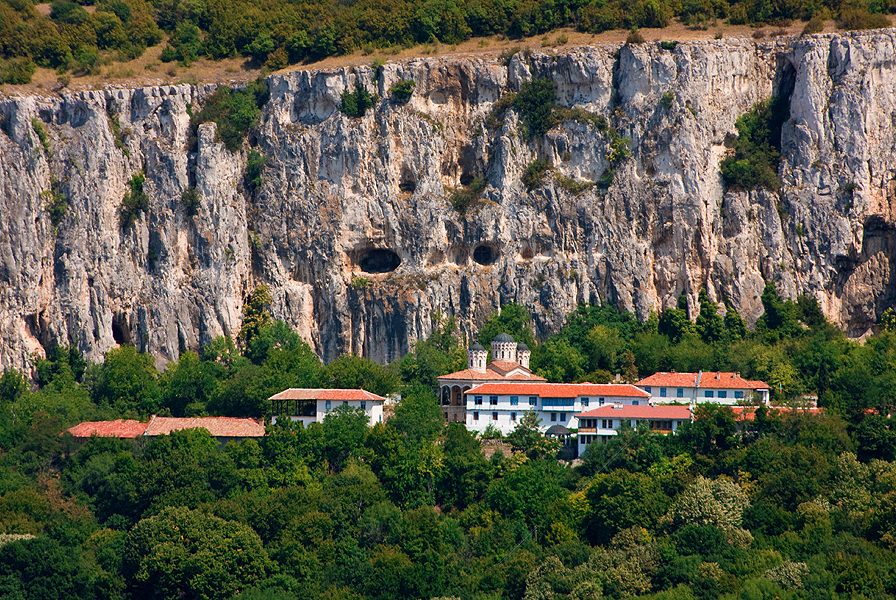
Patriarchal Monastery of the Holy Trinity, Veliko Tarnovo
The monastery took on its present appearance in 1927 when it was reconstructed.
The Patriarchal Monastery of the Holy Trinity was inhabited only by monks until 1946 when the first women came. In the beginning, they lived in the farm buildings. It is now a convent.
Accommodation is not available at the monastery. Icons can be purchased in it.
The patron saint’s day of the monastery is celebrated on Pentecost (49 days after the first day of Easter).
How to get there:
The route to the Holy Trinity Monastery starts from the outskirts of Veliko Tarnovo, near the remains of Tsarevets Fortress. The junction leading to the monastery is approximately 2-3 km away on the road to Gorna Oryahovitsa, just before Arbanasi Village entrance.
The post Patriarchal Monastery of the Holy Trinity – Veliko Tarnovo appeared first on Tour4Fun.
]]>The post The Zemen monastery “Saint Joan Bogoslov” appeared first on Tour4Fun.
]]>If you want to hear Bulgarian Orthodox Chants, listen to the video.
If you want to buy CD disk with Bulgarian Orthodox Chants click here.
If you want to buy a voucher for concert performed by Orthodox Choir click here.
Performance of Bulgarian Orthodox Choir
If you want to buy a Bulgarian Orthodox icon with certificate click here.

Icon of Guardian Angel
The post The Zemen monastery “Saint Joan Bogoslov” appeared first on Tour4Fun.
]]>The post The Ustrem monastery “Saint Troitza” (Holy Trinity) appeared first on Tour4Fun.
]]>If you want to hear Bulgarian Orthodox Chants, listen to the video.
If you want to buy CD disk with Bulgarian Orthodox Chants click here.
If you want to buy a Bulgarian Orthodox icon with certificate click here.

Icon of the Holy Trinity - Old Testament
If you want to buy a voucher for concert performed by Orthodox Choir click here.
Performance of Bulgarian Orthodox Choir
The post The Ustrem monastery “Saint Troitza” (Holy Trinity) appeared first on Tour4Fun.
]]>The post The Troyan monastery “Uspenie Bogorodichno” (The Assumption) appeared first on Tour4Fun.
]]>If you want to buy a Full day excursion to the Troyan monastery, click here.

If you want to buy a voucher for concert performed by Orthodox Choir click here.
The monastery was a local center of spiritual education and literacy. Several manuscript books from XVIII and XIX c. are known to have been written and rewritten by local monks. Since the middle of XVIII c. a school has been opened in the monastery.
If you want to hear Bulgarian Orthodox Chants, listen to the video.
If you want to buy CD disk with Bulgarian Orthodox Chants click here.
The most significant cultural monument in the Troyan Monastery is the church "Uspenie Bogorodichno"/The Assumption/. It is situated in the southern yard among two and three-floor bay-window housing buildings. The church is an architectural and color center of the ensemble. It is a single-nave building. For the initial outlook of the church and the buildings around it we learn from a print from 1839 and from the description and the paintings of the Hungarian traveler Feliks Kanitz. In 1847 the monks from the monastery invited Zahari Zograf to paint the murals of the temple. His works cover all the internal walls of the temple with bright harmonious colors and numerous rarely-met scenes. The external walls of the tower were also covered with decorative-monumental ornaments. Interesting ornamental compositions have been preserved until present-day on the second floor. They enhance the solemn colors of the Revival atmosphere in the monastery's yard. The wood carving of the Troyan monastery is exceptionally rich. The iconostases of the main church and the two chapels have the best carvings. The oldest carving is in the chapel "Saint Nikola". It has the stylistic elements of the early Tryavna carving. Most impressive is the carving of the gold coated iconostasis in the main church. In its columns, horizontal cornices, flowers, birds, leaves, grape clusters one can feel the flexibility and solemnity. Felix Kanitz told that the iconostasis was made in 1839-1840 by the wood-carver Nikola Mateev from Novo Selo. The solemn atmosphere of the temple is further enhanced by the icons of the iconostasis. According to some specialists they were made by Zahari Zograf, while others think they were made by his brother Dimiter. They have the typical characteristics of the Samokov art school. Apart from the paintings the museum has preserved a collection of applied art works.
If you want to buy a Bulgarian Orthodox icon with certificate click here.

Icon The Birth of Christ
The post The Troyan monastery “Uspenie Bogorodichno” (The Assumption) appeared first on Tour4Fun.
]]>The post The Sokolovo monastery appeared first on Tour4Fun.
]]>The housing and farming buildings are located on the upper platform. They were built in a Revival period style with bay-windows, wooden verandas and staircases. They encompassed the big monastery's yard in the middle of which there is a beautiful fountain, built by Kolyo Ficheto. During the Revival Period the Sokolovo Monastery had a huge educational activity. With the efforts of the abbot of the monastery a school was established where the children from the adjacent villages studied. Today almost all the housing buildings of the Sokolovo monastery have been restored, representing the Revival Period outlook of the monastery.
If you want to hear Bulgarian Orthodox Chants, listen to the video.
If you want to buy CD disk with Bulgarian Orthodox Chants click here.
If you want to buy a voucher for concert performed by Orthodox Choir click here.
If you want to buy a Bulgarian Orthodox icon with certificate click here.
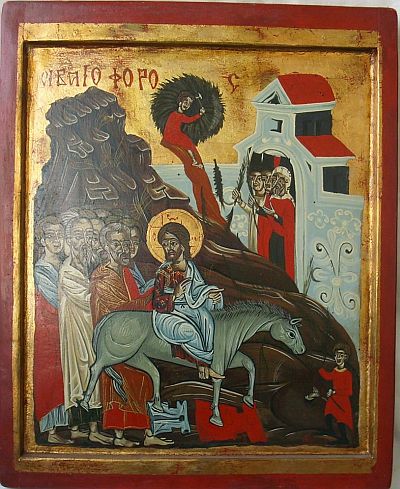
Icon of the Entry into Jerusalem
The post The Sokolovo monastery appeared first on Tour4Fun.
]]>The post The Rila monastery appeared first on Tour4Fun.
]]>If you want to hear Bulgarian Orthodox Chants, listen to the video.
If you want to buy CD disk with Bulgarian Orthodox Chants click here.
If you want to buy a voucher for concert performed by Orthodox Choir click here.
 Together with the architectural-construction facilities during XIII-XIV c. in the monastery were created interesting manuscripts, magnificent wood-carving works, murals of high artistic value and other works of the material and spiritual culture. The Ottoman wave which stroke the Balkan Peninsula at the end of XIV c. had serious devastating effects on the Rila Monastery. During the first decades of XV c. due to tactical reasons the monastery remained intact but in the middle of XV c. it was plundered and destroyed and the monks were chased away. For a short period the spiritual activity in the monastery stopped. It was later renovated in the second half of XV c. by three brothers - Yoasaf, David and Teofan. The development of the monastery during XVI and XVII c. and during the period of the Ottoman domination was a succession of progress and decline. It was often plundered and burned down. Most active and fertile was the period of the Enlightenment from XVIII - XIX c. The economically enriched Bulgarian people provided the material base for development, enrichment and growth of the monasteries. After a fire from 1833, when almost all buildings were burned down, master Pavel built the main church and master Milenko built the southwestern part of the buildings in 1846-1847. Despite the fact that the monastery was in different stages and by different master builders it is a complete ensemble with supplementing elements. The main building materials are wood, bricks, stone and mortar plaster. The main church stands in the middle of the monastery.
If you want to buy a Bulgarian Orthodox icon with certificate click here.

Icon of Saint John of Rila
The Rila Monastery has a rich collection of murals. They were painted at different epochs and by different artists. The oldest among them are the murals in the small chapel-church on the last floor of the medieval tower. The tower itself with its high stone walls is a magnificent monument of the medieval construction and architecture. Despite the damages caused by the time and the fires the murals have preserved some themes of rare icon-painting style. The greatest merit of this picturesque monument is the mastery of its performance. The style represents the newest trends in the clerical Eastern Orthodox art from the first half of XIV c. The figures are of refined proportions and harmony, typical for the Balkan monumental painting from XIV c. These murals mark one of the zeniths of the Bulgarian medieval icon-painting. The mural decoration of the church "Saint Peter and Pavel", made in 1491 is partially preserved. It has elements of the tradition of XIV c. and was made with strict observation of the clerical rules. The paintings are of great mastery of the story-telling and expressiveness of the colours. In the Rila Monastery the mural painting art of the Bulgarian Enlightenment is fully represented. Prominent master artists from the Revival period took part in decorating the murals such as: Dimiter and Zahari Zograf from Samokov, Dimiter and Simeon Molerovi from Bansko and many others. The Rila Monastery is also rich in icon painting - another genre of the clerical painting. One of the greatest and varied collections of icons is kept in the Rila Monastery with works from XIV until XIX c. The oldest icon is the "Saint Ivan Rilski" from XIV c. The numerous collection of icons of high artistic value is a significant part of the painting heritage of the Bulgarians. The wood-carving is another important part of the spiritual riches of the monastery. Here can be seen one of the earliest examples of that art - the wood-carved gate of the old medieval church from XIV c. The carving was made with the typical for that time interlaced design and fretworks. It captures the eye with its harmony and proportions of the elements. The most gorgeous and solemn of the 13 wood-carved iconostases of the monastery is the iconostasis of the Main church. It was made from 1837-1843 by master wood-carvers from Samokov lead by master Atanas Teladur. The iconostasis is made of walnut-tree and is gold coated. It has elements of the plant and animal life. The iconostasis, together with the other elements - the pulpit, the throne and the wood carved frames and others contribute to the solemn glamour and representativeness of the interior. A peak in the works of the miniature wood carving is the Rafael's Cross. It was made of linden-tree for the period from 1782 until 1802 and has 36 scenes and several hundreds of figures. The wide construction and artistic activity in the Rila Monastery is combined with the great progress of spiritual-educational activities. In the monastery worked literary men, teachers and patriots such as: Yosif Bradati, Spiridon, Neofit Rilski etc. The Rila Monastery is one of the first distributors of the graphics for Bulgaria. Here was opened the first printing establishment. Here were also created many works of the applied art: gold-woven cleric clothes and other objects related to the ecclesiastical ritual. There are preserved examples from XV-XVIII c. The monastery has preserved numerous works of the goldsmithery, metal plastics, jewelries, women's decorations, costumes etc.
The post The Rila monastery appeared first on Tour4Fun.
]]>The post The Batoshevo Monastery appeared first on Tour4Fun.
]]>The monastery's housing quarters date from XIX c. and are situated at the eastern, northern and western sides of the church. They engirdled the monastery's yard with double-floor corpora with wide verandas like most of the monasteries of that time. Soon after its construction the Batoshevo monastery became a prosperous educational center. After the failure of the April Rebellion the Turkish armies plundered and burned down the housing and farming buildings. Only the temple survived without serious damage.
If you want to hear Bulgarian Orthodox Chants, listen to the video.
If you want to buy CD disk with Bulgarian Orthodox Chants click here.
If you want to buy a voucher for concert performed by Orthodox Choir click here.
Performance of Bulgarian Orthodox Choir
If you want to buy a Bulgarian Orthodox icon with certificate click here.
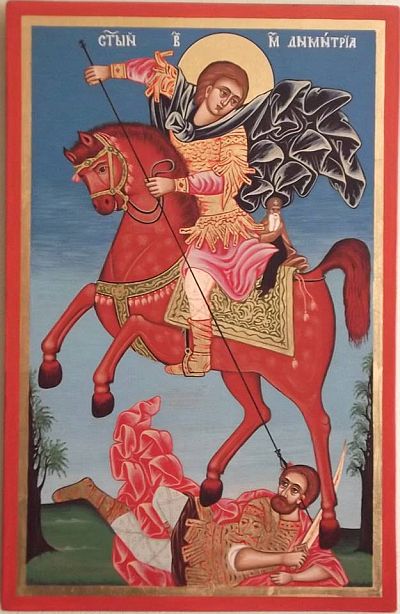
Icon of Saint Dimitar
The post The Batoshevo Monastery appeared first on Tour4Fun.
]]>The post The Bachkovo monastery “Saint Bogoroditza Petrichka” appeared first on Tour4Fun.
]]>If you want to hear Bulgarian Orthodox Chants, listen to the video.
If you want to buy CD disk with Bulgarian Orthodox Chants click here.
If you want to buy a voucher for concert performed by Orthodox Choir click here.
If you want to buy a Bulgarian Orthodox icon with certificate click here.

Triptych - The Creation of the World
The construction of the present-day main church is related to the period of renovation of the monastery, which started at the end of XVI c. until the middle of XVII c. The main church was built over the foundations of the old Bacurian church to the likeness of the Sveta Gora temples. It houses one of the earliest wood-carved iconostasis on the Bulgarian lands. The wood-carving was made by a skillful and talented master. According to the foundation inscription the church was icon painted in 1643. The original icon paintings were covered with a new layer in XIX c by Mosko Odrichanin. The old refectory is in the preserved part of the southern wing of the monastery. It was built together with the main church. Here is preserved an original marble table made in 1601, according to the preserved inscription. In 1643 the refectory was decorated with mural paintings which in terms of artistic values can be measured to the most refined examples of the Sveta Gora temples. In the Bachkovo monastery are preserved remarkable works of the applied arts. The high professional achievements in this field and the specific decoration are reasons to believe that the monastery was an important goldsmith center during XVII-XVIII c. The monastery's library is famous for its Byzantine, ancient Bulgarian and Georgian books. Among them there is a unique Byzantine musical manuscript from XIII c. In the monastery were found 103 manuscripts and 252 old-print books which rightfully are called "literary treasures". In the beginning of XIX c. there was a new widening of the monastery with donations of the Bulgarian people. Main donors from the period 1760-1860 were Stoyan Chalakov and his brother Valko Chalakov from Plovdiv and Edirne, Turkey. The buildings in the southern yard of the Bachkovo monastery were built in 1834. In 1839-1841 Zaharii Zograf painted the icons of the new church. Among the portraits of the Plovdiv donors he also painted his own portrait. In XIX c. the Bachkovo Monastery was the most important spiritual center of the district.
The post The Bachkovo monastery “Saint Bogoroditza Petrichka” appeared first on Tour4Fun.
]]>The post Aladzha Monastery appeared first on Tour4Fun.
]]>In the steep rocks there are numerous natural and artificially dug out chambers which were used as monk cells and churches. They are distributed in three or four layers in the rocky wreath. The floors are interconnected by paths and stairs hewn in the rocks. Somewhere there are artificially made narrow passes. The inhabitants used the alternating soft and hard layers of the rocky structure, the distance between which was about 2 - 2.50 m, so that they could make the different floors. Life has existed in these rocky cells ever since the prehistoric period and the ancient times. The settling of the monks dates from XI - XII c. Some historians think it is even earlier. In the nearby village of Osenovo was discovered an Early Christian church with mural paintings. In Varna there are also sites from the early Byzantine period. Most probably life in this holy place died at the beginning and in the middle of the Ottoman oppression. The initial outlook of the monastery is considerably changed nowadays. The big landslides and rock subsidence have destroyed part of the chambers. Today there are remains of about 20 chambers and three churches. The trace of mural paintings show that they were decorated with traditional ecclesiastical paintings. The monastery entrance was from the eastern part where there are remains of a wide staircase and corridors. On the second floor is situated one of the churches. Only the eastern part of the church with an upside niche and the northern side are preserved. Here there are images of saints in their full length, wearing bishop's clothes. The widest clerical chamber is on the second floor at the western part of the complex. It is 12 m long, 5.70 m wide and 1.95 - 2.05 m high. The chamber is hewn in the rock and has a complex architectonics in the eastern part. Only the western part of the southern wall has collapsed. The place of the ancient iconostasis is marked by deep canals and nests hewn in the walls and the vault. At the eastern part (mainly in the niches) there are remains of a fine lime plaster over which there were paintings.
If you want to buy a voucher for concert performed by Orthodox Choir click here.
If you want to buy a Bulgarian Orthodox icon with certificate click here.
Icon The Birth of Christ - 17th century
The third and the most well - preserved church is a small chapel on the last floor of the complex. It is the bottom of a corridor. Its southern wall was artificially built like the biggest part of the southern walls of the chambers. According to the architectural plan the church with rectangular form. It is 3.50 m long, 2.60 m wide and 1.90 m high. The mural decorations are well - preserved in this chamber. They are most legible at the southern wall where there are fragments of 5 upright figures of saints. Even better is preserved the ceiling's decoration. Typical characteristics of this painting are: the well - defined lines, the virtuous laconic stylization and the multi - colored patterns. A predominant theme is depicting the images of saint - monks. At a distance of 400 - 500 m from the main part of the monastery, at the foot of a lower rocky shelf, there is another group of chambers called the Catacombs. There were several chambers with unclear purpose on the first floor and two on the second one. In one of the chambers can be seen the grooves of many beams which were used to form shelves. Most probably this was the charnel house of the monastery. In the adjacent chamber there are 5 tombs hewn in the rock.
If you want to hear Bulgarian Orthodox Chants, listen to the video.
If you want to buy CD disk with Bulgarian Orthodox Chants click here.
The post Aladzha Monastery appeared first on Tour4Fun.
]]>